Discover what to practice each day, how to build active vocabulary, improve grammar, practice speaking, and use authentic English resources without turning every day into homework

6 min read
•
October 6, 2026
If you’ve been studying English forever, some tests may show that you’re at Intermediate (B1), while others say you’re Pre-Intermediate (A2). And you may partially agree with both. Because one day, you feel like you’re finally making progress. The next day, you feel like you’ve forgotten all the words and grammar rules you knew…
This is a classic learning path.
And if you’re ready to read this article in English, you’re ready to officially start working toward B1.
In this article, we’ll show you a practical 7-day English self-study plan with tools and resources you can use every week.
At B1 English level, you can usually understand the main points of conversations about familiar topics, communicate in common everyday and work situations, describe your experiences, and explain your opinions.
There is no official CEFR vocabulary number for B1. Different sources give different estimates, but you may know around 1,500–2,500 words actively and understand even more passively.
*Active vocabulary = words you actually use.
*Passive vocabulary = words you understand when you read or hear them but don’t normally use yourself.
So yes, it is a lot of words :) But the point is not only to know them. You need to learn how to use them.
In this plan, we’ll show you how to organize your week so that every day you know exactly what to do with your English.
────────────
This is the day when you collect new information, words, phrases, and expressions from different resources. Ideally, make it your vocabulary day.
Give yourself one simple task: find 20 new words or expressions from an article, YouTube video, podcast, social media post, or another resource. We highly recommend using authentic materials aka English created for real life, instead of only using texts that are deliberately simplified for your level. Learning from real English will help you a lot in the long run (= in the future).
If you want to improve your general English, follow your favorite Instagram or YouTube creators. Read or listen to what they say and note down useful phrases. If you love F1, for example, follow Lewis Hamilton. Even one recent Instagram post can contain useful vocabulary for you.

If you need Business English, read articles from industries that interest you. For example, if you work in IT, you can read our blog or even your own company’s blog to see how they communicate in English.
One of our students’ favorite tasks is to steal vocabulary from X (Twitter) and LinkedIn. Choose a modern company you like, for example, Lovable, open their latest posts and find useful phrases you could actually use yourself.
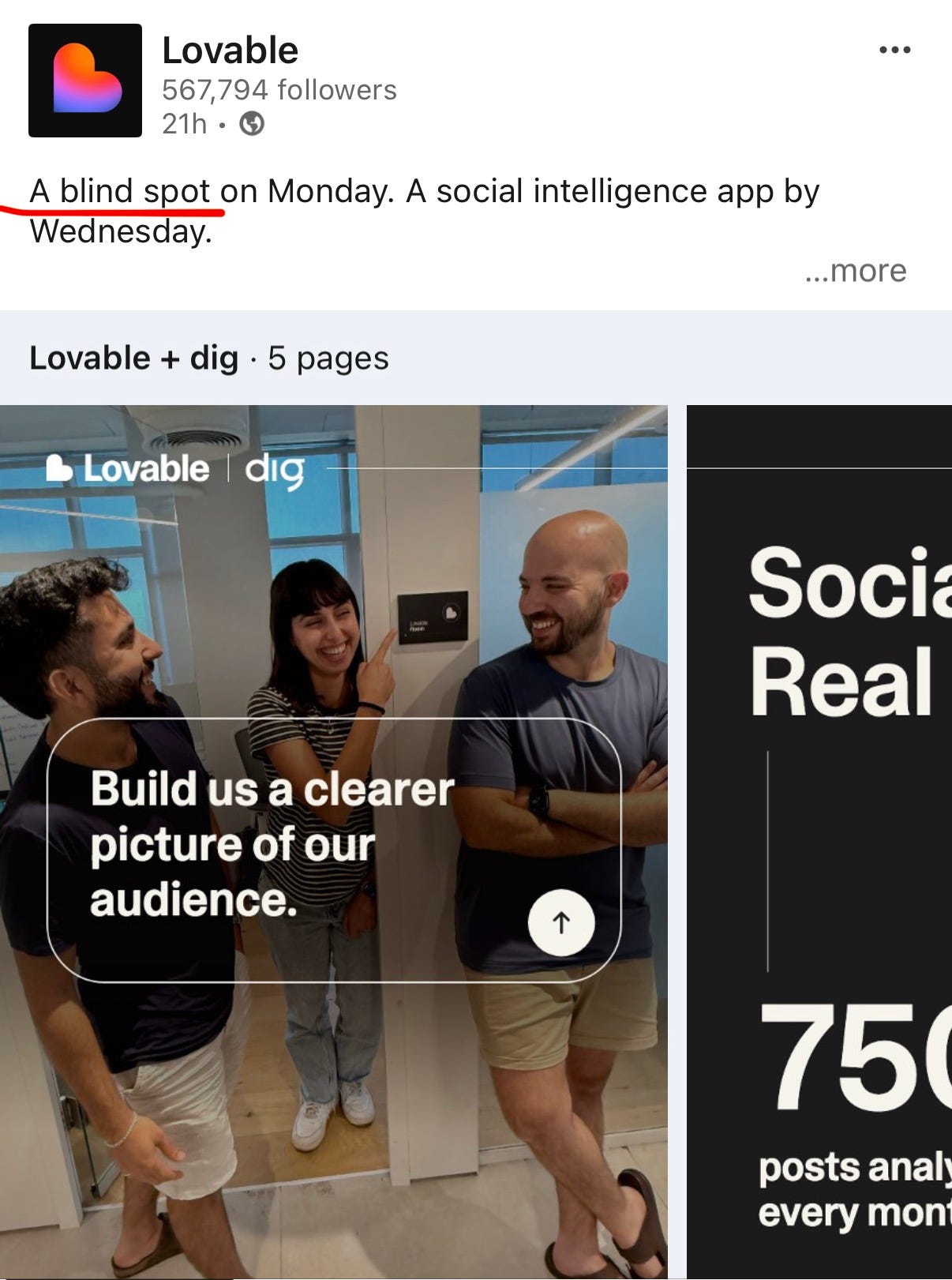
Your task for Day 1: add 20 new words or expressions to your vocabulary list.
────────────
Now it’s time to move yesterday’s vocabulary from your passive vocabulary into your active vocabulary.
If you study alone, one of the easiest ways to do this is to create a sentence with every new expression and then record yourself saying it. It may sound simple, but this is exactly the point: you need to make your brain use the language instead of only recognizing it.
For example, imagine yesterday you learned the phrase “a blind spot”. You could create a sentence like:
“Your feedback helped me notice a blind spot, thank you.”
Then say it out loud.
Your task for Day 2: use all 20 expressions from Day 1 in your own sentences.
────────────
Like every system, a language has technical details too. We’re talking about grammar.
Make this your grammar day. Choose one grammar rule, explore it, be a nerd about it, and understand why and how people use it. Don’t try to study five different rules at the same time.
Still don’t understand something? Ask ChatGPT or Claude to explain it to you. You can use this prompt:
I’m learning English at A2–B1 level. Explain [GRAMMAR RULE] to me using simple English. Show me when people use it, give me 5 everyday examples, and then give me 5 short exercises. Don’t show me the answers until I ask.
Remember: one grammar topic a day.
────────────
You already know what an input day is: a day when you absorb English from authentic resources and build your vocabulary.
Don’t read long and difficult books if you don’t enjoy them. A 10-minute YouTube video or a 5-minute article can do magic.
Our top recommendation: subscribe to a few newsletters you enjoy. Then, when Day 4 comes, you simply open your inbox and choose something to read. You stay updated on interesting topics and learn English at the same time.
If you work in marketing, try Marketing Brew. If you work in HR, try HR Brew. And if you want something more general about life and culture, even Cosmopolitan can work!
Your task for Day 4: add another 20 useful words or phrases to your vocabulary list.
────────────
Same flow — now let’s get down to practice. Hopefully, by Day 5, you’re feeling a little braver. Create sentences with yesterday’s vocabulary and record yourself saying them.
Or try something slightly more challenging: open a Zoom or Google Meet session. Don’t invite anyone. Imagine you’re having a call with another person and give yourself one task: use at least 50% of yesterday’s vocabulary while speaking.
You can talk about your week, your job, a project you’re working on, a movie you’ve watched, anything. Speak as if no one is listening. Which is 100% true, by the way :)
────────────
Saturday is your full immersion day. The goal is simple: today you don’t need to study English, you need to start living it.
Watch a movie or YouTube videos in English. Listen to a podcast while walking. Change your phone language to English. Read comments under a post. Follow English-speaking creators.
But most importantly: talk to someone. Nothing fully replaces real conversations.
Find a speaking club, language exchange, teacher, or conversation buddy and spend at least 30–60 minutes speaking English.
You don’t need to speak perfectly. Your task is to react, answer questions, explain your ideas, forget a word, find another way to say it, make mistakes, and keep talking.
────────────
No studying today! Give your brain a break.
You’ve already collected around 40 new words and phrases, practiced them, worked on grammar, listened to authentic English, and hopefully had a real conversation. That’s enough.
You can still watch Netflix, scroll Instagram, or listen to music in English if you want to, but don’t turn everything into homework.
Your goal is not to become B1 in seven days.
Your goal is to create a weekly system that you can repeat until English starts feeling easier and more natural. And we hope that this system will help you a lot.
────────────
Discover additional articles to boost your English at work.

Англійська мова та soft skills для IT-фахівців і tech-компаній


© 2026 English For IT™. Всі права захищено